While tennis champion Sabine Lisicki talks about managing her grass allergies with medications, playing a sport on grass can often be managed even more effectively through desensitization to grass by allergen immunotherapy, or "allergy shots". Bottom line: no need to give up your favorite sport just because grass exposure is involved. Call if you need some help with managing your allergies so that you can focus on your game!

Welcome to the South Bay Allergy & Asthma Blog where you will find tips and advice from board certified Allergy and Immunology doctors and nurses on dealing with nasal, seasonal, insect, medication, food and skin allergies. Also visit our blog to stay current on news and advances in care and treatment of allergy, asthma and immunology, including developments in the world of immunotherapy: allergy shots, drops and tablets.
Showing posts with label seasonal allergies. Show all posts
Showing posts with label seasonal allergies. Show all posts
Wednesday, July 3, 2013

Tuesday, October 16, 2012
"Why are my allergy symptoms worse than ever before?"

The answer may be due to the "priming effect".
The "priming effect" is an increased sensitivity of the lining of the nose that occurs with repeated exposure to allergens like pollen.
With the hot weather occurring earlier in the year this year and sticking around longer than usual, there has been more pollen in the air (plants produce more pollen in hotter weather).
This has meant a longer allergy
season and a therefore a more vigorous "priming effect" that has become stronger
and stronger as the different seasons have progressed.
So a person doesn't need to be exposed to as much pollen to have symptoms of hay fever (also known as seasonal allergic rhinitis). These symptoms include sneezing, runny nose, nasal congestion, scratchy throat, watery/itchy eyes and even fatigue. All of these can greatly affect quality of life and can lead to complications like sinus infections and asthma flares.
People who've never had seasonal allergic rhinitis symptoms before may experience them for the first time. Others who could control these symptoms with over the counter medications like antihistamines now need additional medication to help symptoms.
We are currently in the fall allergy
season where weeds and molds are the main culprits that cause symptoms. Elm tree pollen is also important here
in So Cal this time of year. The "priming effect" can also cause patients to be more sensitive to other allergens like dust mites and animal dander.
The most important thing for patients to know is: don't ignore your symptoms! If allergen avoidance and over the counter medications are not enough, go see an allergist to discuss other options and to develop a treatment plan that is right for you!
For more information, please visit: www.southbayallergy.com
Monday, October 1, 2012
Cold or Allergy?

Take this quiz to learn more!
For more information, please visit us at www.southbayallergy.com
Source: WebMD
Thursday, September 27, 2012
Oral Allergy Syndrome
 Sometimes my mouth tingles when I eat melons - is this a food allergy?
If you also happen to be allergic to ragweed pollen, you may be experiencing a type of allergy called "oral allergy syndrome". This occurs when eating fruits or vegetables containing proteins that are cousins of pollen proteins, especially during that specific pollen season. So eating melons during the early fall, when ragweed pollens are high, can result in itching or tingling of the lips or mouth. People with birch pollen allergy may react in this way when eating apples.
Are these symptoms dangerous?
Unlike peanut or shellfish proteins, which often cause serious allergic reactions, these fruit proteins are rapidly broken down by enzymes in your mouth or stomach, making it very unlikely that they will make it into your bloodstream to cause a severe reaction.
As with all allergy symptoms, however, it is advisable to have any adverse reactions to a food checked out by an allergist for specific recommendations.
For more information, visit our website at www.southbayallergy.com.
Thursday, September 20, 2012
Fall Allergy Tips!
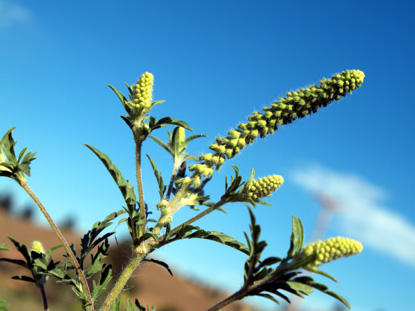 Look out for ragweed and mold! They are 2 of the main culprits that can cause allergy symptoms in the Fall.
Ragweed and other weeds are the biggest allergy triggers in the Fall. They begin pollinating in August and can travel hundreds of miles in the wind.
Mold thrives in damp areas such as in the piles of damp leaves lining yards and streets, bathrooms, and damp basements.
Here are some tips to manage your Fall allergies:- Limit your time outdoors when pollen counts are high and close your windows during windy days to keep pollen from blowing in. (check daily pollen counts in your zip code on our website: www.southbayallergy.com)
- Use your HEPA (high efficiency particulate air) filter, which removes at least 99% of pollen, as well as animal dander, dust and other particles.
- Wear a mask when raking leaves to avoid inhaling mold spores.
- Before turning on the heater for the first time, clean the heating ducts and change the filters because mold and dust particles can become trapped in the vents over summer.
If you have symptoms like sneezing, runny or stuffy nose, or itchy eyes or throat, you should see an allergist to discuss treatment options like prescription medications or allergy shots.
For more information, please visit our website at www.southbayallergy.com
For more information, please visit our website at www.southbayallergy.com
Source: ACAAI
Thursday, August 30, 2012
Is Elm Blooming on Your Street?

Tuesday, March 6, 2012
Quiz: Do You Know the Facts on Allergies?
Here is a great quiz offered by WebMD. How well do you know the facts on allergies? Click here to take the quiz
Thursday, February 16, 2012
Tips for Fighting Winter Allergies

It's winter and even in sunny Southern California, we are closing up our houses and trying to keep warm at night. If you have allergies or asthma, keep that indoor environment free of allergens and airborne irritants and enjoy some nice clean air:
Keeping warm
- Opt for a radiant space heater or washable blankets rather than forced air heater, especially if your air ducts have not been professionally cleaned in the last few year.
- Fireplaces are cozy, but may create smoke that irritates the airways, and firewood can bring in pollen or mold as well.
Clean heating ducts and filters
- Dust and dust mites thrive in your heating system. Professional cleaners can give your ducts a clean bill of health. A complete air duct cleaning should be done at least every 5 years.
- Change heat system filters at least once a month.
When it's cold or rainy outside, pets need to come in, but exposure to pet dander will increase, so...
Beware of extremes
- Keep them in a confined living area, preferably one without carpeting -- not the bedroom if you or a family member is allergic to animal dander.
- Give them a bath every week if pet dander is a problem.
Beware of extremes
- When it's very cold outside, keep your face covered.
- Avoid running or exertion in extremely cold air if you are prone to asthma.
Avoid airborne irritants
Common examples of indoor airborne irritants that may make it into your home:
- Potpourri
- Fireplace smoke
- Cigarette smoke
- Air fresheners
- Incense
- Scented candles
Saturday, January 14, 2012
Sinus infection, a cold, or allergies?
 The phrase "I have sinus problems" has become so common, it is hard to know what it means. Here are some tips to tell the difference between sinus pressure due to true sinus infection, a cold, or allergies:
SINUS INFECTION (BACTERIAL SINUSITIS): This is a bacterial infection in the sinuses (which are areas behind the facial bones that should be filled with air). Signs can range from a wet cough, thick mucus in the throat, discolored (green, yellow, brown or grey) mucus that persists for more than a week or progresses over that time, pain in the upper teeth or cheeks, tenderness between the eyes or a chronic headache, and nasal congestion -- especially if symptoms are on one side only. Kids tend to cough or vomit mucus as their only symptom.
A COLD (VIRAL RESPIRATORY INFECTION): Sometimes difficult to distinguish early on from a sinus infection, the tip offs are that multiple people in the household start with similar symptoms within a week of each other (viral infections spread easily), there is a worsening within a few days then gradual improvement, and there may be fever or muscle aches associated for one or two days.
NASAL ALLERGIES: The biggest clue here is itching of the nose, eyes, ears, or throat. Repeated sneezing is also more likely to be due to allergies but can happen with colds as well. Runny nose is usually clear and watery, not discolored. But congestion and headaches can be just as bad as with sinusitis or viral respiratory infections.
Treatment is different for each of the above, so it is important to make the distinction. If you have persistent symptoms and need some help with figuring out the reasons, make an appointment and we'll do our best to help you! Send us a message from our "contact us" page at southbayallergy. com.
Friday, January 13, 2012
Fires in So Cal and Santa Ana winds make things tough for asthmatics

Monday, October 3, 2011
5 facts about Ragweed

Fast Facts about fall's nastiest weed.
1. There are dozens of varieties of ragweed, but common and giant ragweed are the biggest culprits.
2. Ragweed pollen can travel; it has been measured in the air 400 miles out to sea and two miles up in the atmosphere.
3. A ragweed plant lives only one season, but produces up to 1 billion pollen grains.
4. People with ragweed allergy may also get symptoms when they eat cantaloupe and banana. That's an allergic cross-reaction.
5. Some people relocate to get away from ragweed, and while that often helps for a few years, it's common to develop allergies to plants in the new location within a few years.
Source: Asthma & Allergy Foundation of America
Subscribe to:
Posts (Atom)