Showing posts with label ragweed. Show all posts

Tuesday, October 16, 2012

"Why are my allergy symptoms worse than ever before?"

Many people are experiencing severe allergy symptoms right now and many of them are asking "why are my symptoms more severe than ever before?"

The answer may be due to the "priming effect".

The "priming effect" is an increased sensitivity of the lining of the nose that occurs with repeated exposure to allergens like pollen.

With the hot weather occurring earlier in the year this year and sticking around longer than usual, there has been more pollen in the air (plants produce more pollen in hotter weather).

This has meant a longer allergy season and a therefore a more vigorous "priming effect" that has become stronger and stronger as the different seasons have progressed.
 
So a person doesn't need to be exposed to as much pollen to have symptoms of hay fever (also known as seasonal allergic rhinitis). These symptoms include sneezing, runny nose, nasal congestion, scratchy throat, watery/itchy eyes and even fatigue. All of these can greatly affect quality of life and can lead to complications like sinus infections and asthma flares.
 
People who've never had seasonal allergic rhinitis symptoms before may experience them for the first time. Others who could control these symptoms with over the counter medications like antihistamines now need additional medication to help symptoms.

We are currently in the fall allergy season where weeds and molds are the main culprits that cause symptoms. Elm tree pollen is also important here in So Cal this time of year. The "priming effect" can also cause patients to be more sensitive to other allergens like dust mites and animal dander.

The most important thing for patients to know is: don't ignore your symptoms! If allergen avoidance and over the counter medications are not enough, go see an allergist to discuss other options and to develop a treatment plan that is right for you!

For more information, please visit: www.southbayallergy.com

Thursday, September 27, 2012

Oral Allergy Syndrome

Sometimes my mouth tingles when I eat melons - is this a food allergy?

If you also happen to be allergic to ragweed pollen, you may be experiencing a type of allergy called "oral allergy syndrome".  This occurs when eating fruits or vegetables containing proteins that are cousins of pollen proteins, especially during that specific pollen season.  So eating melons during the early fall, when ragweed pollens are high, can result in itching or tingling of the lips or mouth.  People with birch pollen allergy may react in this way when eating apples.  

Are these symptoms dangerous?

Unlike peanut or shellfish proteins, which often cause serious allergic reactions, these fruit proteins are rapidly broken down by enzymes in your mouth or stomach, making it very unlikely that they will make it into your bloodstream to cause a severe reaction.

As with all allergy symptoms, however, it is advisable to have any adverse reactions to a food checked out by an allergist for specific recommendations.

For more information, visit our website at www.southbayallergy.com.

Thursday, September 20, 2012

Fall Allergy Tips!


Look out for ragweed and mold! They are 2 of the main culprits that can cause allergy symptoms in the Fall.

Ragweed and other weeds are the biggest allergy triggers in the Fall. They begin pollinating in August and can travel hundreds of miles in the wind.


Mold thrives in damp areas such as in the piles of damp leaves lining yards and streets, bathrooms, and damp basements.
 
Here are some tips to manage your Fall allergies:
  • Limit your time outdoors when pollen counts are high and close your windows during windy days to keep pollen from blowing in. (check daily pollen counts in your zip code on our website: www.southbayallergy.com)
  • Use your HEPA (high efficiency particulate air) filter, which removes at least 99% of pollen, as well as animal dander, dust and other particles.
  • Wear a mask when raking leaves to avoid inhaling mold spores.
  • Before turning on the heater for the first time, clean the heating ducts and change the filters because mold and dust particles can become trapped in the vents over summer.
If you have symptoms like sneezing, runny or stuffy nose, or itchy eyes or throat, you should see an allergist to discuss treatment options like prescription medications or allergy shots.

For more information, please visit our website at www.southbayallergy.com

Source: ACAAI


Monday, October 3, 2011

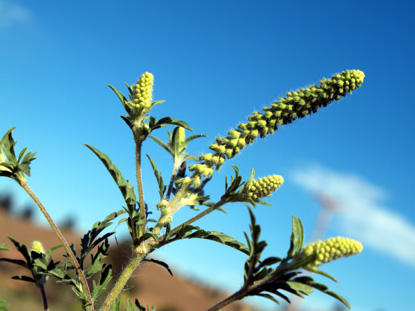
5 facts about Ragweed


Fast Facts about fall's nastiest weed.


1. There are dozens of varieties of ragweed, but common and giant ragweed are the biggest culprits.


2. Ragweed pollen can travel; it has been measured in the air 400 miles out to sea and two miles up in the atmosphere.


3. A ragweed plant lives only one season, but produces up to 1 billion pollen grains.


4. People with ragweed allergy may also get symptoms when they eat cantaloupe and banana. That's an allergic cross-reaction.


5. Some people relocate to get away from ragweed, and while that often helps for a few years, it's common to develop allergies to plants in the new location within a few years.


Source: Asthma & Allergy Foundation of America