Showing posts with label asthma action plan. Show all posts

Thursday, October 11, 2012

Is There A Natural Cure for Asthma?

With all the new findings on alternative medicine and natural remedies, you may wonder if there’s a natural cure for asthma. Unfortunately, there is no cure for asthma at this point. In fact, it’s highly advisable to avoid any asthma treatment or product -- natural or otherwise -- that claims to be a "cure" for asthma.


Can Natural Therapies Help to Manage Asthma?

Some natural therapies may help to manage symptoms of asthma. For instance, a negative response to emotional stress can cause an asthma attack. Some natural relaxation remedies like deep abdominal breathing, progressive muscle relaxation, guided imagery, and biofeedback can help relieve stress.
Other findings suggest that diet plays a role in alleviating asthma symptoms. For example, it’s thought that omega-3 fatty acids found naturally in high-fat fish such as salmon, mackerel, or cod enable the body to make more products that tend to decrease inflammation. Whether or not this may be of benefit to those with asthma is still unproven.

Pros and Cons of Natural Asthma Remedies

As you consider the different types of natural asthma remedies available, it’s of utmost importance to cautiously balance your desire to breathe easier with the possible dangers of the treatment, which may be unknown. Never use any natural dietary supplement without checking first with your allergist.
If you are uncertain about the claims on a natural dietary supplement product label, see your allergist before taking it so that they can assess the product to let you know what it contains.

Goals of Managing Asthma

Your goal in managing asthma is to:
  • Get an accurate asthma diagnosis.
  • Work with your allergist to develop an asthma action plan.
  • Monitor your peak flow rate daily and take appropriate measures when it drops.
  • Keep an asthma diary so you can track all your symptoms and medication use.
  • Avoid asthma triggers or causes of asthma, including outdoor irritants such as smog.
  • Seek medical advice and treatment for coexisting problems that can worsen asthma symptoms, such as GERD, allergic rhinitis, and sinusitis.
  • Exercise daily to maximize your aerobic fitness.
  • Prevent exercise-induced asthma by medicating before exercise.
  • Eat nutritous foods to maximize your immune defenses against viral and bacterial infections.
  • Maintain a normal weight.
  • Check in with your allergist regularly for breathing tests to make sure your asthma is managed and your medications are working optimally.
  • You hold the key to living well with asthma. Trust your allergist to give you guidance, and then take daily responsibility for your breathing with proven self-care measures.
For more information, visit our website at www.southbayallergy.com.
Source: WebMD

Monday, July 2, 2012

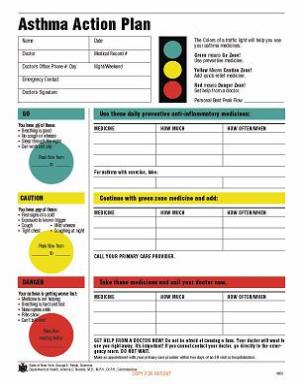
Asthma Action Plan


Having an asthma action plan is the best way to prepare for asthma attacks – and to be able to act quickly when an attack happens.

The breathlessness of an asthma attack is scary to witness, especially when the person having trouble breathing is your child or another loved one. But you have to act quickly and make smart decisions even if you are frightened – and having a solid asthma action plan in place could even save a life.
Your asthma action plan should include knowledge of your loved one’s triggers, symptoms, and prescription medications, and will help you answer questions like these in an emergency:
  • What type of asthma treatment should you administer?
  • When should you call the doctor?
  • When should you call 911?
Asthma Treatment: Who Makes the Asthma Attack Action Plan?
Your Allergist can help develop a plan for treatment of your asthma.  We like to use an asthma action plan to help customize each patients treatment.
Asthma Attack: How to Respond to Asthma Symptoms
Learning which symptoms require which action is an important starting point for any caregiver of someone who has asthma attacks. Symptoms that need a response include:
  • Wheezing
  • Chest tightening
  • Shortness of breath
  • Waking up at night with symptoms
  • Difficulty completing usual activities (in a child, this may be a lack of interest in playing)
Your loved one's action plan for asthma treatment should detail:
  • The daily dose of medication needed for long-term asthma control
  • The triggers or allergens that can set off asthma symptoms
  • The dosage of the medication you can give and whether it’s appropriate to administer an additional or increased dose when symptoms flare
  • The symptoms that warrant a call the doctor or dictate a trip to the emergency room (and it should include contact information for those locations).
Most people who have only occasional asthma symptoms in response to allergens or strenuous exercise can get by with an albuterol rescue inhaler. But the exact medication and dose needed when symptoms intensify depends on such individual factors as age, overall health, and other medical issues.
People with persistent or severe asthma may have one or two medications they take daily to control their asthma symptoms and prevent asthma attacks, in addition to rescue inhalers to help control immediate symptoms. It’s also important in asthma treatment to try to remove allergens or triggers from your loved one’s environment.
Asthma Action Steps: When to Call the Doctor
If your loved one has an asthma attack and doesn’t experience relief within 10 minutes of administering a short-acting beta-2 inhaler, such as an albuterol inhaler, it’s time to call the doctor. It’s important to note that these inhalers are not intended for daily use in asthma treatment. If the asthmatic uses the inhaler two or more times a week to control asthma symptoms, the asthma is poorly controlled and the doctor should be notified.
Asthma Action Steps: When to Go to the Emergency Room
Go to the ER if:
  • You gave the prescribed medications and symptoms were not relieved in the time you expected (usually about an hour)
  • Your loved one cannot walk or talk and breathe
Giving additional or stronger doses of medications beyond what has been prescribed can be dangerous (sometimes even leading to death). You will need a professional medical checkup because there may be another underlying illness causing the asthma symptoms.
Bottom line: An asthma action plan will make you and your loved one feel more secure. Talk to your loved one's doctor and get your specific plan of action in place before an asthma attack occurs.
Source: EverydayHealth.com